Does Sleep Affect the Heart? New Research Ties Insomnia to Cardiac Risk

A client once told me she’d stopped mentioning her sleep problems to her cardiologist because nobody ever connected the two. Her blood pressure kept creeping up year after year, her doctor kept adjusting medications, and not once did anyone ask how she was sleeping. She’d had insomnia for over a decade by then. As it turns out, that disconnect between cardiology and sleep medicine is exactly what the field’s largest annual gathering just spent four days trying to close.
The SLEEP 2026 Annual Meeting wrapped in Baltimore on June 17, jointly hosted by the American Academy of Sleep Medicine and the Sleep Research Society. Thousands of researchers and clinicians spent four days presenting findings across posters, symposia, and oral sessions, and Medscape’s coverage of the meeting’s most clinically relevant sessions pulled out the findings with the most direct bearing on frontline patient care. The headline result deserves the attention it’s getting: chronic insomnia isn’t just uncomfortable. It’s a measurable cardiovascular risk factor, and treating it changes the numbers on a chart.
Insomnia Finally Gets Treated Like a Cardiac Risk Factor
For years, insomnia sat in an awkward clinical no man’s land. Primary care physicians treated it as an annoyance to manage with a prescription and move past. Cardiologists rarely asked about it at all. The research presented at SLEEP 2026 makes that separation much harder to justify.
People with chronic insomnia carry significantly elevated risk for hypertension, heart failure, coronary artery disease, and stroke compared to people who sleep normally. The mechanism traces back to two systems working overtime every single night: the hypothalamic-pituitary-adrenal axis and the sympathetic nervous system. In a person with chronic insomnia, both stay activated well past the point where they should be winding down. Overnight cortisol and catecholamine levels run high, parasympathetic tone gets suppressed, resting heart rate climbs, and over months and years that pattern erodes vascular function and raises inflammatory markers tied directly to cardiovascular disease.
Here’s the part that actually changes clinical practice. Cognitive Behavioral Therapy for Insomnia, the first-line treatment recommended ahead of medication by every major guideline, produced measurable drops in blood pressure, inflammatory markers, and cortisol patterns among patients who completed it. Insomnia treatment isn’t just a comfort intervention anymore. It belongs in the same conversation as diet, exercise, and blood pressure medication when a clinician is thinking about cardiovascular risk reduction.
Where EEG Hyperarousal Enters the Conversation
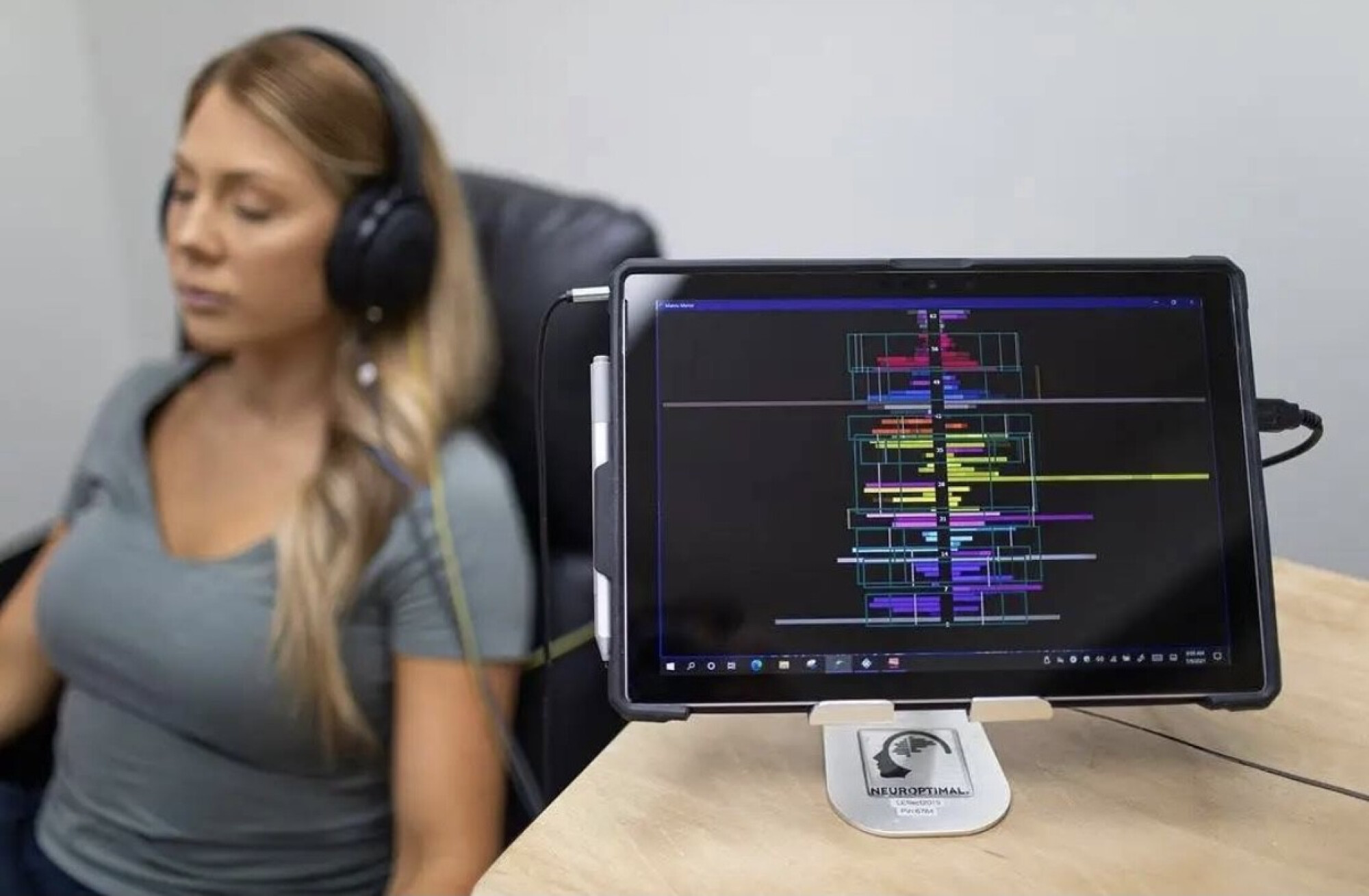
The HPA axis and sympathetic overdrive described at SLEEP 2026 has a signature that shows up somewhere else entirely: the scalp. This is the same physiological state we watch on quantitative EEG every day in a neurofeedback clinic, and it goes by a familiar name in that world too. Hyperarousal.
Chronic insomnia and anxiety share more overlapping biology than most people realize, and elevated frontal beta activity is one of the clearest points of convergence. A nervous system stuck producing high-frequency beta waves in the 20 to 30 Hz range at bedtime is a nervous system that hasn’t gotten the signal to power down, and that’s precisely the cortical expression of the same HPA and sympathetic activation driving the cardiovascular findings out of Baltimore. The overnight cortisol and catecholamine surge isn’t happening in isolation from what the cortex is doing. It’s part of the same loop. A brain running hot on beta at 11 PM is very often attached to a body that’s still running hot on stress hormones, and neither one settles down until the other does.
Where CBTi Can Fall Short
Sleep-onset insomnia so often resists advice that assumes the problem is purely behavioral for exactly this reason. Telling someone to keep a consistent bedtime and avoid screens helps, but it doesn’t touch a nervous system that’s neurologically stuck in an alert state. The cortex has to actually learn to produce a different pattern before the behavioral advice has anything to work with. That’s a training problem, not just a scheduling problem, and it’s exactly the gap alpha-theta neurofeedback was built to close.
Sleep-onset latency research backs this up in a way that’s easy to overlook. People with primary insomnia don’t just report feeling wired at bedtime, they measurably produce more high-frequency EEG activity during the sleep-onset window than normal sleepers, even when both groups are lying in the dark with their eyes closed attempting the same task. The brain of an insomnia patient is doing something different at a neurological level, not just a psychological one, which is part of why purely cognitive interventions sometimes plateau. A thought pattern can be restructured. A brainwave pattern that’s been running the same way for a decade needs its own kind of retraining.
Digital CBT-I Is a Genuine Step Forward, and Also Not the Whole Answer
SLEEP 2026 also spent considerable attention on access. There are fewer than 1,000 board-certified behavioral sleep medicine specialists in the entire country, which is nowhere near enough to deliver CBT-I face to face to the estimated 10 to 30 percent of American adults dealing with chronic insomnia. Digital CBT-I programs, including newly FDA-cleared prescription digital therapeutics, showed outcomes comparable to in-person treatment and represent a real expansion of access for primary care physicians who want to offer something beyond a sleep medication refill.
That expansion matters and deserves genuine credit. But CBT-I, digital or in-person, works primarily on the cognitive and behavioral layer: the thoughts about sleep, the habits around sleep, the conditioned anxiety that builds up around the bed itself. For a meaningful subset of patients, especially those whose insomnia sits on top of a chronically hyperaroused nervous system, that layer isn’t the only one that needs addressing. The physiological alarm state has to come down too, and that’s a harder target to hit with cognitive restructuring alone.
The Alpha-Theta Program at Sleep Recovery
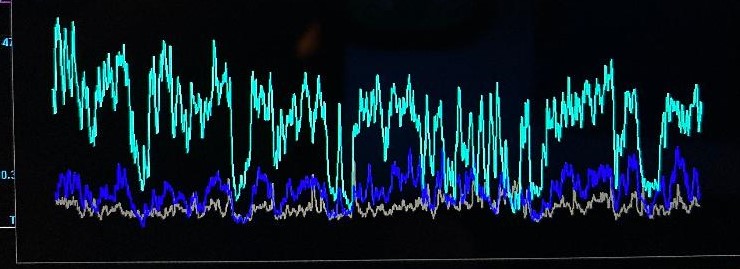
Alpha-theta neurofeedback earns its place alongside CBT-I rather than in competition with it, and this is precisely where it fits. The protocol trains the brain toward the alpha-theta crossover, the same transitional state the nervous system passes through naturally on the way into sleep, where alpha waves around 8 to 12 Hz and theta waves around 4 to 8 Hz begin to trade dominance. For a nervous system that’s forgotten how to find that transition on its own, repeated practice inside that state appears to help rebuild the pathway.
At Sleep Recovery, every alpha-theta session runs on live EEG feedback. Sensors track brainwave activity continuously while a client rests in a low-stimulation setting, and the moment the brain produces the target alpha-theta pattern, it receives an immediate auditory cue, usually a soft tone or a shift in ambient sound. There’s no mental effort involved, and trying harder doesn’t actually help. The nervous system learns implicitly, the same way it learned to regulate breathing or balance without anyone explaining the mechanics.
Sessions build cumulatively rather than delivering a one-time fix. A single session teaches the brain almost nothing new. Twenty sessions, spaced consistently, start to shift what the nervous system treats as its resting default. Clients often describe the first noticeable change as falling asleep faster on nights they didn’t even think about their training, which is usually the clearest sign the new pattern is becoming automatic rather than something they’re consciously managing.
We start every client with baseline quantitative EEG mapping before building a protocol, because the insomnia presentation on a brain scan varies enormously from person to person. Someone with racing, ruminative sleep-onset insomnia often shows frontal beta running high at bedtime. Someone with early-morning waking and a body that won’t stay asleep may show a completely different signature. Matching the training to the actual pattern on the scan, rather than applying a generic relaxation protocol, is what separates targeted neurofeedback from a meditation app.
The overlap with the cardiovascular findings out of SLEEP 2026 is worth sitting with. If chronic HPA and sympathetic overdrive at night is driving both the sleeplessness and the long-term cardiovascular risk, then anything that reliably teaches the nervous system to downshift at night is doing double duty. Clients who complete an alpha-theta series often report the sleep improvements first, but many also mention feeling calmer and less reactive during the day, which tracks with a nervous system that’s finally practicing a different baseline instead of running on alert around the clock.
None of this replaces CBT-I, and it shouldn’t be framed that way. The two approaches work on different layers of the same problem, the cognitive-behavioral layer and the physiological arousal layer, and for a lot of clients with entrenched, long-standing insomnia, addressing both gets results that neither one produces alone.
A Note on Shift Work and the Same Underlying Pattern
SLEEP 2026 also drew attention to shift work sleep disorder, which affects roughly 15 to 20 percent of the U.S. workforce and carries a cardiovascular risk profile that runs 2 to 3 times higher than day workers, even after controlling for lifestyle factors. Fewer than 5 percent of affected workers receive any diagnosis or treatment at all. It’s a different clinical picture from primary insomnia, driven by circadian misalignment rather than a purely hyperaroused nervous system, but the underlying autonomic strain looks familiar. A body forced to be alert when its internal clock expects sleep, and asleep when its internal clock expects alertness, ends up running the same overtaxed HPA and sympathetic machinery night after night. For shift workers whose sleep problems have outlasted every schedule adjustment and light therapy attempt, an EEG assessment can help clarify whether a secondary hyperarousal pattern has developed on top of the circadian mismatch, which changes what kind of intervention actually helps.
What This Means for Anyone Living With Insomnia
The bigger takeaway from SLEEP 2026 is that sleep medicine and cardiology are finally speaking the same language, and insomnia is losing its status as a minor complaint that can wait. If a decade of poor sleep has been quietly reshaping someone’s cardiovascular risk the entire time, the case for treating insomnia early and thoroughly gets a lot stronger.
For clients who’ve tried the standard sleep hygiene advice and still lie awake with a brain that won’t quiet down, that persistence usually isn’t a discipline problem. It’s a nervous system stuck in a hyperaroused pattern that behavioral advice alone doesn’t reach. EEG-guided alpha-theta training gives that nervous system a different kind of practice, one rep at a time, until the downshift into sleep starts to happen without a fight.
If sleepless nights have started to feel like a cardiovascular conversation as much as a sleep conversation, that instinct is now backed by the research. Worth exploring what a targeted, EEG-based approach could add to the picture.
Sleep Recovery, Inc. sleeprecovery.net Neurofeedback and brainwave entrainment for anxiety, trauma, and insomnia.