Sleep Deprivation and the Law: How Unlawful Interrogation Abuse is Destroying Lives
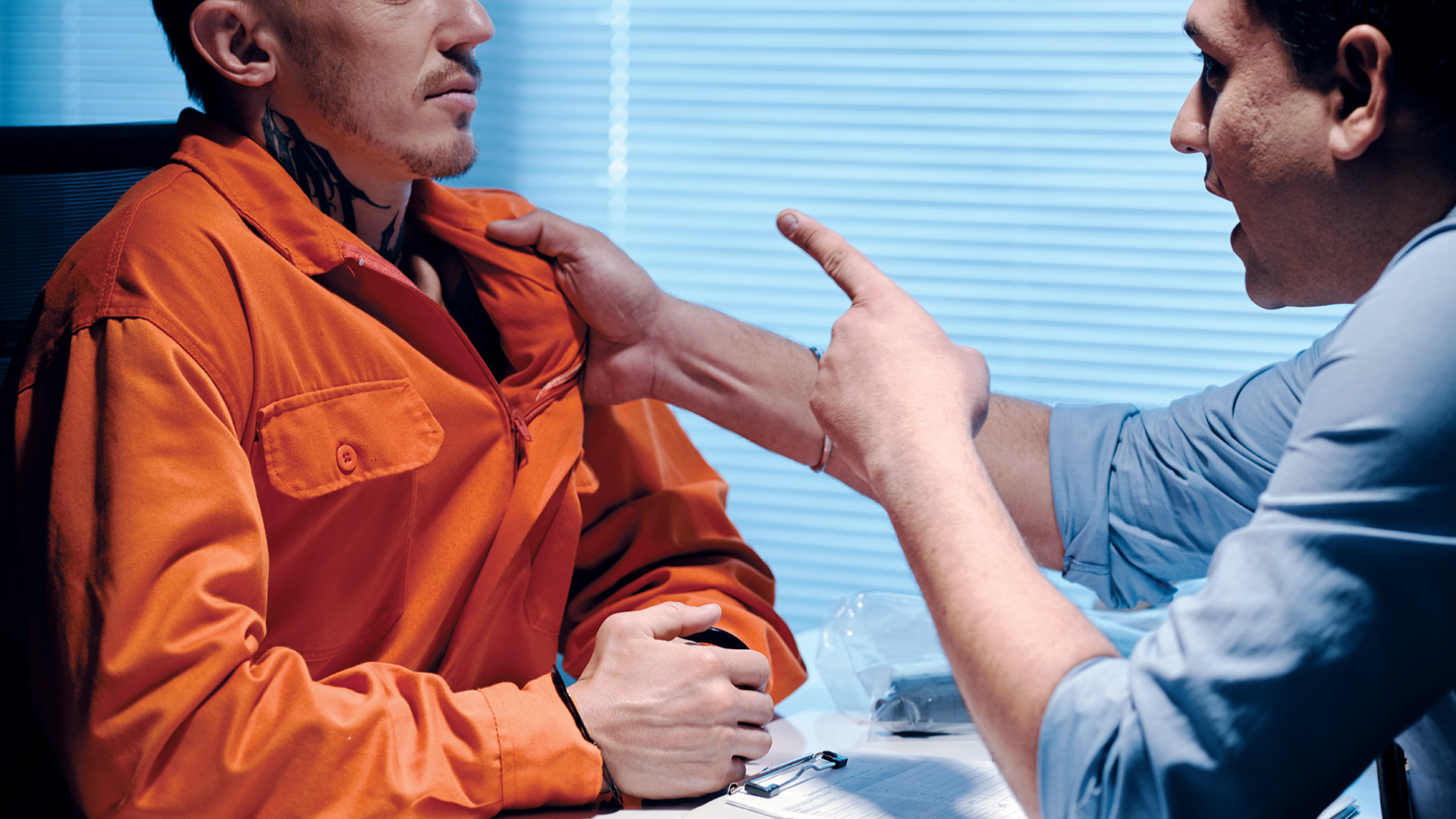
All kinds of people confess to crimes they’re never guilty of. Not occasionally. Regularly. And one of the most common factors receives almost no attention in courtrooms across America: sleep deprivation.
New research from Iowa State University reveals something disturbing about our legal system. The US legal system accounts for intellectual disabilities when weighing confessions. But we ignore institutionalized brain fog, even though being awake for 24 hours impairs judgment as much as being legally drunk.
Witnesses give statements while exhausted. Victims recount trauma after sleepless nights. And suspects face questioning during marathon sessions designed, in part, to wear them down. The system treats sleep loss as irrelevant when determining whether someone’s words can be trusted.
When Your Brain Wants It to Stop
Zlatan Krizan studies how sleep deprivation affects decision-making. His team at Iowa State University, working with Breanna Curran and Richard Leo from the University of San Francisco School of Law, published findings in Psychology, Public Policy, and Law that should concern anyone who cares about justice.
Sleep-deprived brains shift into survival mode. Long-term thinking shuts down. A person facing 36 hours of interrogation stops considering whether confessing might lead to a 20-year sentence. Their exhausted brains focus entirely on relieving the immediate stress.
“When someone is exhausted, they’re more likely to focus on getting out of the stressful moment rather than thinking about long-term consequences,” Krizan explained. Complying to make the situation stop becomes the only option a fatigued mind can process.
And extreme fatigue creates something worse. Confusion. People begin doubting their own memories, leaving them vulnerable to suggestive tactics. Some internalize false information provided by interrogators and come to believe it actually happened.
The Double-Bind Problem Nobody Talks About
Patrol officers and detectives often believe they already know who’s guilty and who’s not.
When investigators “know” someone committed a crime, confirmation bias takes over. Questions get framed to confirm suspicions rather than test them. Body language gets interpreted through the lens of presumed guilt. And sleep-deprived suspects, struggling to think clearly, often can’t mount effective defenses against this presumption.
A double-bind problem can emerge from both sides. Investigators who’ve already decided someone is guilty can’t clearly see even obvious evidence of innocence. Exhausted suspects can’t see how their own behavior and statements are being interpreted. Neither party has an accurate perception anymore.
Recent reports of immigration enforcement agents fabricating laws during encounters highlight a broader issue in law enforcement culture. When some personnel operate with minimal oversight and believe their judgment supersedes procedure, the vulnerable become more vulnerable. Sleep-deprived suspects facing interrogators who’ve already decided guilt have almost no protection.
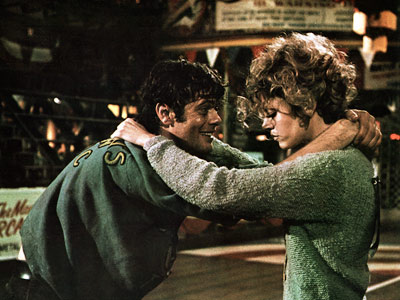
From the film, They Shoot Horses Don’t They? 1969
The Thirty-Six Hour Marathon
Standard interrogation practices in many jurisdictions allow questioning sessions to extend for 36 hours or more. Not continuously. In shifts.
Interrogators rotate in and out, staying fresh and alert. They work eight or twelve-hour blocks, go home, sleep, and return. The suspect gets no such relief. Hours blur together. Fatigue compounds. The power imbalance grows more extreme with each passing hour.
A 1944 Supreme Court ruling established that 36 hours of nonstop interrogation constitutes “inherently coercive” treatment. But that ruling only applies to continuous questioning. Break it into shifts? Split it across multiple sessions? Those scenarios exist in a legal gray area with no firm standards.
Krizan’s research team found that courts rarely suppress confessions simply because a suspect was sleep-deprived. Fatigue gets treated as less important than intoxication, despite producing comparable cognitive impairment.
Consider the asymmetry. An investigator works a full shift, gets a good night’s sleep, and returns to question someone who’s been held overnight in a cell designed to prevent rest. The lights stay on. Noise prevents sleep. By morning, the suspect faces fresh interrogators while operating at a severe cognitive disadvantage.
What Twenty-Four Hours Without Sleep Actually Does
The research is detailed and disturbing. After 24 hours awake, cognitive impairment reaches 0.10% blood alcohol concentration—above the legal driving limit in every state.
Would you ever allow someone at 0.10% BAC to sign away their Miranda rights? We assume not. Yet exhausted and memory-challenged people do it every day, and courts accept these waivers as valid.
Sleep loss weakens executive function. The region of the brain called the prefrontal cortex, which is responsible for judgment, planning, and impulse control, goes offline. Decision-making collapses. Risk assessment fails. A suspect in that state can’t properly weigh whether waiving their right to an attorney is appropriate or not. Even asking them after they’ve requested an attorney, “Why, what do you need to hide?” is a gross assault on Miranda law itself.
Memory distortion accelerates with fatigue. Eyewitness recall weakens. Autobiographical details blur. Susceptibility to misinformation skyrockets. A tired witness shown crime scene photos might internalize details that weren’t part of their original memory and report them as if they were.
“Sleep loss can weaken eyewitness recall, reduce autobiographical detail, and increase susceptibility to misinformation and leading questions,” Krizan noted. Memory errors occur even in non-confrontational interviews. Add interrogation pressure, and the risk multiplies.
Vulnerable Before They Ever Enter the Room
People who interact with the criminal justice system arrive already compromised. Large-scale studies show that populations with frequent police contact experience poorer, more disrupted sleep than the general public.
Trauma disrupts sleep. Violence disrupts sleep. Poverty disrupts sleep. The very populations most likely to become suspects or witnesses come to police encounters already sleep-deprived from chronic stress.
Krizan emphasized this often-overlooked factor: “Many people who interact with the justice system—from suspects to witnesses—are exhausted, anxious, and significantly sleep-deprived. These factors can affect the statements people give.”
Late-night arrests compound the problem. Police interviews often take place during natural low points in human alertness. Someone arrested at 2 AM and questioned at 4 AM operates at a severe cognitive disadvantage, even if they slept well the previous week.
The combination proves devastating. Take someone with trauma-induced chronic insomnia, arrest the suspect late at night, hold them overnight in conditions that prevent sleep, then question them the next afternoon. You’ve created optimal conditions for unreliable statements and false confessions.
Krizan’s team proposed a three-tier framework for courts to assess sleep-related impairment:
Low to moderate impairment: 24 hours without sleep or only four hours per night over two days. At this level, fatigue exceeds legal blood alcohol limits. Suspects face a higher risk of false confessions when confronted with guilt-presumptive questioning.
High impairment: 48 hours without sleep or only four hours per night over four days. Significant impairment in cognitive and emotional functioning becomes universal. More importantly, this exceeds the Supreme Court’s 36-hour threshold, recognized as “inherently coercive.”
Extreme impairment: 72 hours without sleep or only four hours per night for a week. Psychosis begins. Physiological functions break down.
Currently, there is no legal requirement to document when suspects last slept. No protocol exists for noting signs of significant fatigue during questioning. Video recordings are rarely analyzed for fatigue markers, even when confession validity is legally challenged.
The researchers argue for simple documentation requirements. Record when interviews occur and how long they last. Note observable signs of fatigue. Treat sleep-deprived witnesses and suspects the same way we treat intoxicated or cognitively impaired individuals.
How do we turn the lens of standard interrogation training on itself? How can detectives “walk a mile in the shoes” of suspects about to be questioned? The best place to begin would be to keep officers in training fully awake for 36 hours, and to have them question themselves about personal details 12 hours, 72 hours, and 90 days prior. Video record it all. Let them sleep, and play it back to them multiple times. Once is not enough. Most adult men (myself included) struggle with cranial density disorder, aka stubborn as all hell.
The Innocent Who Can’t Prove It
False confessions seem incomprehensible to people who’ve never experienced severe sleep deprivation. Why would someone admit to murder when they’re innocent?
But the exhausted brain doesn’t process questions the same way. An interrogator saying, “Just tell us what happened, and this ends,” sounds like salvation. The fatigued mind can’t project forward to trial, conviction, sentencing. It can only grasp the immediate promise: say the words, and the stress stops.
Some suspects, confronted with fabricated evidence while exhausted, come to doubt their own memories. “Maybe I did do it and blocked it out.” “Maybe I was drunk and don’t remember.” The interrogator’s certainty, combined with the suspect’s confusion, creates false memories that feel real.
Richard Leo, who co-authored the research, has documented numerous cases where innocent people confessed after extended interrogations. Many were involved in sleep deprivation combined with other coercive tactics. Some involved investigators were so certain of guilt that they rejected exculpatory evidence even after DNA testing proved innocence.
What Fair Process Actually Requires
The legal system claims to value truth and due process. But allowing exhausted people to make life-altering decisions contradicts both values.
Krizan emphasized that sleep disruption needs documentation, management, and consideration in legal decisions. “If we care about truth, fairness, and due process, we cannot afford to treat sleep disruption as an afterthought.”
Better standards won’t eliminate false confessions. Intellectual disabilities, mental illness, youth, and psychological coercion all contribute to unreliable statements. But acknowledging sleep deprivation as a major factor would prevent some wrongful convictions.
The research team noted that overnight or extended interrogations increase vulnerability to coercion, specifically because they disrupt sleep and induce fatigue. Limiting these practices would improve statement reliability across the board.
Every false confession means multiple failures. An innocent person goes to jail. The actual perpetrator remains free. Tax dollars get wasted prosecuting the wrong person. Public trust in the justice system erodes.
Sleep deprivation doesn’t just harm suspects. Exhausted witnesses provide unreliable testimony. Insomniated victims struggle to recount trauma coherently. Fatigued crime scene technicians make mistakes. Sleep loss degrades every component of the investigative process.
And the people most vulnerable to sleep-related impairment are often those least able to advocate for themselves. Young suspects. People with cognitive disabilities. Individuals experiencing poverty or homelessness. Non-native English speakers.
Moving Toward Evidence-Based Justice
Law schools need to teach about the effects of sleep deprivation on the reliability of statements. Judges need science-based frameworks for assessing fatigue-related impairment. Prosecutors need to recognize that securing confessions from exhausted suspects doesn’t serve justice.
Law enforcement culture needs to be re-examined. The goal should be accurate information, not mentally broken suspects. Interrogation techniques that rely on wearing people down through exhaustion may elicit statements, but they don’t reliably yield the truth.
“Sleep loss isn’t a minor variable,” Krizan concluded. “It shapes the reliability of the evidence on which justice depends.”
The criminal justice system built protections against coerced confessions decades ago. Miranda warnings. Rules against physical abuse. Prohibitions on certain deceptive tactics. Those protections emerged because experience showed coercion produces unreliable statements.
Sleep deprivation coerces through exhaustion what violence once coerced through pain. The effect is the same: statements that can’t be trusted, confessions that may not be true, convictions that rest on sand.
Recognition of the problem is growing. But implementation of solutions remains inconsistent. Until courts treat sleep deprivation with the seriousness it deserves, innocent people will continue confessing to crimes they didn’t commit. The guilty will sometimes walk free while the wrong person sits in prison.
The brain doesn’t lie about fatigue. When cognitive function deteriorates to the level of legal intoxication, treating that person’s decisions as fully voluntary represents willful blindness to reality. Justice requires better.