Schizophrenia’s Latest Research: How Gamma Entrainment Rebuilds Fractured Brainwave Architecture
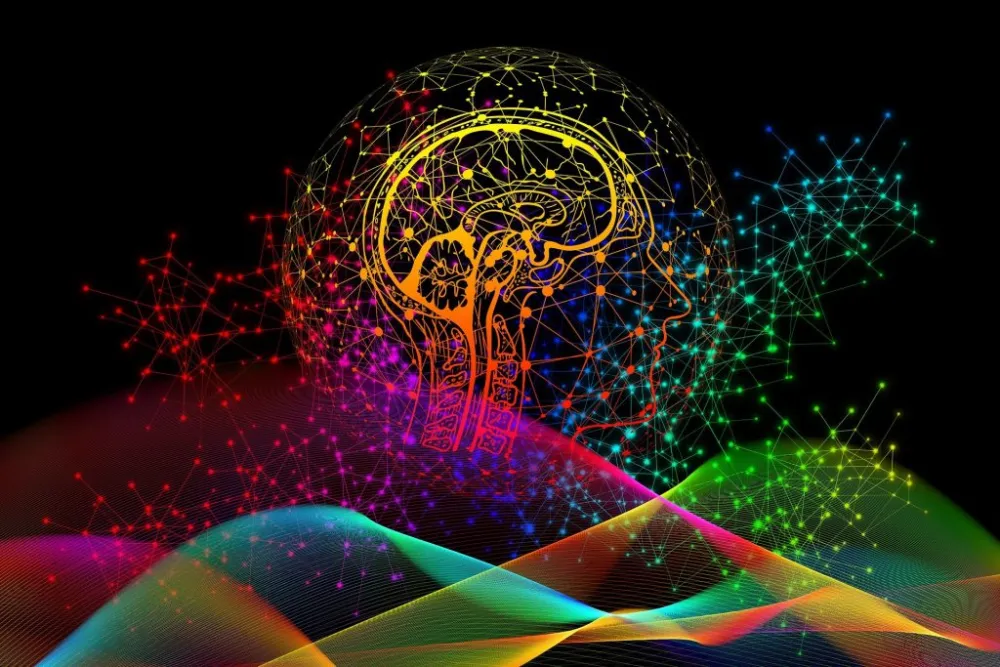
When it’s purring at its peak, the neocortex will conduct a literal symphony of 40 cycles per second. Gamma oscillations, rapid bioelectrical rhythms between 30 and 100 Hz, coordinate neural networks across distant brain regions—this activity enables memory formation, attention control, and coherent thought processing.
In schizophrenia, the gamma rhythm simply fractures. Neural networks fire out of sync. The 40 Hz coordination that normally binds sensory information, cognitive processing, and motor planning into a unified experience disintegrates into chaos.
New research published in Translational Psychiatry demonstrates how 40 Hz transcranial alternating current stimulation (tACS) can restore shattered gamma architecture in schizophrenia patients. The rebuilding of neural synchronization and the reversal of cognitive deficits, based on the recent data, realigns a neuro-harmony that pharmaceutical interventions leave untouched.
When Brain Networks Lose Their Rhythm
Schizophrenia manifests through fragmented thought processes, hallucinations, and cognitive deterioration that progressively destroys quality of life. While antipsychotic medications suppress psychotic symptoms, they typically fail to address the cognitive deficits proving most disabling: impaired working memory, destroyed executive function, and attention control.
The neurobiological root runs deeper than neurotransmitter imbalances. Schizophrenia involves profound disruption of neural oscillations, particularly within this (gamma) frequency band. The 40 Hz rhythm plays a crucial role in attention, memory encoding, and perceptual processing, precisely the domains devastated in schizophrenia.
The study employed multiple tACS sessions targeting the dorsolateral prefrontal cortex and superior temporal gyrus. Participants underwent EEG recordings before and after stimulation to quantify changes in neural synchronization.
Results were striking: 40 Hz tACS produced a marked enhancement of oscillatory activity, correlating directly with improved performance on standardized cognitive assessments of working memory and executive function. Gamma stimulation rebuilt actual neural synchronization patterns, enabling coherent cognitive processing.
Beyond Schizophrenia: The Alzheimer’s Breakthrough
A decade of research from MIT’s Picower Institute has produced mounting evidence that 40 Hz stimulation via light, sound, combined audiovisual input, or tactile vibration reduces hallmarks of Alzheimer’s pathology, including amyloid and tau proteins, prevents neuron death, decreases synapse loss, and sustains memory and cognition in various Alzheimer’s mouse models.
Research published in Nature showed that 40 Hz audio and visual stimulation induced interneurons to increase the release of the peptide VIP, thereby prompting increased clearance of amyloid from brain tissue via the brain’s glymphatic system—the neural waste-disposal network.
Clinical trials moved beyond animal models. Phase II studies showed people with Alzheimer’s exposed to 40 Hz light and sound experienced significant slowing of brain atrophy and improvements on cognitive measures compared to untreated controls. The intervention also produced significant preservation of white matter, ie, the brain’s communication infrastructure.
A Harvard Medical School team demonstrated that 40 Hz gamma stimulation using transcranial alternating current stimulation significantly reduced tau burden in three out of four human volunteers. Researchers in Scotland used audio and visual gamma stimulation to improve memory recall in over 100 participants.
How Gamma Oscillations Enable Cognition
Research documents how gamma rhythms facilitate precise information transmission during attention, cognition, and memory. GABAergic interneurons fire rhythmically, generating inhibitory postsynaptic potentials that modulate GABA receptors. Gamma oscillations enable excitatory signals to overcome inhibitory signals temporarily, amplifying the efficacy and specificity of information propagation across brain regions.
Gamma oscillations actively participate in memory encoding and retrieval. Learning encoded items increases gamma-band responses during subsequent memory recognition. The oscillations don’t just correlate with cognitive performance; they causally enable it.
Multiple conditions share disrupted gamma rhythms: schizophrenia, Alzheimer’s, autism spectrum disorder, and epilepsy all exhibit abnormal gamma activity. Inducing proper gamma oscillations through external stimulation offers a mechanism to correct dysfunctional brain structures and restore cognitive capabilities.
Audiovisual stimulation in the gamma band alters synaptic plasticity and induces neuroimmune responses, providing neuroprotection. The stimulation modulates the functional status of brain regions, including the frontal, parietal, and occipital lobes, as well as the hippocampus, restoring balance within brain networks and improving network efficiency.
Gamma oscillations facilitate binding, a process where distributed neural representations of different sensory features combine into unified perceptual experiences. Gamma oscillations synchronize distributed neural populations so the brain experiences them as one unified object rather than disconnected features.
The stimulation promotes neuroplasticity, strengthening synaptic connections between neurons that fire together during gamma oscillations. Over repeated sessions, the brain learns to sustain gamma rhythms more effectively without external prompting.

Sleep Recovery’s 40 Hz Gamma Entrainment Program
Sleep Recovery, Inc. has integrated 40 Hz gamma brainwave entrainment into its programs, not as a direct treatment for these conditions, but to ‘counter-intuitively’ help the brain reset itself for better overall functioning. neurofeedback protocols specifically designed to address neural oscillatory disruptions underlying cognitive deficits, memory impairment, and executive dysfunction.
Neuro-exercising works through pure brainwave entrainment—no TMS magnetic fields, no invasive procedures. Audiovisual stimulation delivered at precisely 40 Hz induces the brain to naturally synchronize its own endogenous gamma oscillations with the external rhythm.
In over 30-minute sessions, clients watch visual displays and/or listen to audio tones pulsing at 40 cycles per second. Sensory input entrains neural networks to fire synchronously at 40 Hz. GABAergic interneurons begin releasing neurotransmitters rhythmically. Excitatory pyramidal neurons coordinate their firing patterns. Distributed brain regions that normally operate independently begin communicating via top-down, synchronized gamma oscillations.
The training gradually rebuilds the neural architecture across multiple sessions. Where gamma previously fragmented into incoherent noise, coordinated 40 Hz rhythms spring forth. Working memory capacity expands as the prefrontal cortex sustains synchronized activity during new memory formation. Executive function improves as frontal networks coordinate more effectively with posterior brain regions.
Sleep Recovery, Inc. offers 40 Hz gamma entrainment via remote home training systems that eliminate logistical barriers that prevent many people from accessing brainwave entrainment interventions.
Traditional clinic-based models require clients to travel to an office 2-3 times weekly for months. For elderly clients with dementia, the travel burden proves prohibitive. For caregivers managing someone with schizophrenia or traumatic brain injury, coordinating transportation and supervision for multiple weekly appointments becomes unsustainable. Geographic distance compounds the problem—clients living more than 30 minutes from a walk-in clinic often abandon treatment entirely.
A study published in the Journal of Medical Internet Research examined 560 participants who received therapist-guided app-based remote training. Results demonstrated efficacy in improving mental health and cognitive performance, particularly for individuals with ADHD and anxiety symptoms. The improvements surpassed those seen in other app-based mental health services, including mobile-enabled text psychotherapy and app-based CBT.
Sleep Recovery’s remote system ships directly to the client’s home. The setup process takes under 20 minutes with guided live-video instructions. Clients position themselves comfortably in a quiet room, with the training lamp about 30 inches above their faces.
For caregivers, the convenience proves transformative. No need to arrange transportation, cope with traffic, or coordinate schedules within clinic hours. Sessions can occur in the morning, afternoon, or evening—whatever works best for the household’s routine.
The remote monitoring capabilities ensure clinical oversight remains robust despite physical distance. Weekly telehealth check-ins allow direct communication about symptoms and protocol adjustments.
For clients with mobility impairments, cognitive deficits that make travel disorienting, or transportation barriers, remote training converts a stressful out-patient visit into a seamless, dignified at-home experience. Traumatic brain injury survivors circumvent the cognitive fatigue induced by travel and navigation.
Training frequency increases under remote protocols. Clinic-based models limit clients to 2-3 sessions per week due to scheduling and travel constraints. Remote training enables 4-6 sessions weekly, dramatically accelerating neuroplastic changes and shortening overall treatment duration. The brain responds better to frequent, consistent training than to sporadic, widely spaced sessions.
Sleep Recovery provides comprehensive and ongoing technical support. Equipment malfunctions, software glitches, or discomfort issues: online technicians remain accessible via phone or video chat to troubleshoot immediately. Clients never face prolonged interruptions to training continuity.
Gamma entrainment requires weeks to months of consistent training before structural changes manifest behaviorally. Initial sessions establish entrainment capacity—confirming the brain can synchronize with external 40 Hz stimulation.
Two to four weeks of consistent training produce measurable cognitive changes. Studies document improvements in working memory and executive function after 2-4 weeks of daily 40 Hz stimulation. Whole-brain cerebral blood flow increases, positively correlating with episodic memory performance and induced gamma brain activity.
Sleep Recovery’s typical protocol spans 3-6 months, depending on the severity of baseline gamma disruption and treatment goals. Clients with a schizophrenia impairment may see substantial improvement within 8-12 weeks. Dementia patients require longer intervention, 6-9 months, to produce meaningful symptom stabilization and quality of life improvements.
The Evidence Converges
The fundamental principle stands validated: inducing 40 Hz gamma oscillations restores disrupted neural synchronization, improves cognitive function, reduces pathological protein accumulation, enhances synaptic connectivity, and slows neurodegenerative progression.
For schizophrenia patients whose cognitive deficits destroy independence and quality of life, gamma entrainment offers hope beyond antipsychotic medication’s limited scope. For Alzheimer’s families watching progressive memory deterioration, 40 Hz stimulation provides a non-pharmacological intervention addressing underlying pathology rather than merely managing symptoms.
Sleep Recovery’s remote home training system makes the intervention accessible, affordable, and sustainable for clients and caregivers unable to commit to months of in-clinic sessions. Gamma entrainment occurs in familiar home environments, integrates seamlessly into daily routines, and requires no specialized medical supervision once the initial setup is complete.
The gamma frequency gateway opens the possibility of treating neurological conditions once considered intractable. Remote accessibility ensures those possibilities reach people regardless of geographic location, mobility limitations, or caregiving constraints.
Your brain knows how to hum at 40 Hz. Sometimes it just needs a reminder.
For more information about Sleep Recovery’s programs, please call 800-927-3449.