Covert Adolescent Insomnia: How Hidden Sleep Problems Can Sabotage Your Child’s Future
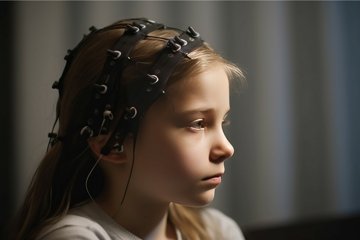
Your teenager sleeps eight hours every night. Eyes closed, body still, breathing steady. You’d never suspect a problem.
But beneath the surface, their brain waves tell a different story. The prefrontal cortex hums with beta-frequency activity—15 to 35 Hz—when deep, restorative delta waves should dominate. They’re cycling through light sleep stages while their brains desperately need the deep and REM sleep that repairs neural tissue and consolidates memory.
Welcome to covert insomnia, the invisible epidemic destroying a generation’s health while parents and pediatricians remain completely unaware.
When Eight Hours Means Nothing
Traditional insomnia screams for attention. Kids toss and turn, complain about exhaustion. Parents notice.
Covert insomnia whispers. Children’s National Hospital sleep researchers note that the earlier teens wake for school, the less time they spend in REM sleep, which occurs predominantly during the second half of the night. Deprivation of REM sleep impacts emotion regulation, learning, and overall health—yet the child appears to sleep straight through the night.
Ask a kid with covert insomnia if they have trouble sleeping. Ninety-nine times out of a hundred, the answer comes back: “I don’t know” or “Not really.”
They’re telling the truth as they understand it. How could they possibly know their sleep architecture collapsed when they have no frame of reference for what healthy sleep feels like? They’ve been operating on deficient deep and REM sleep so long that exhaustion became their baseline normal.
The real answers emerge through asymmetrical questioning. “Do you feel rested or tired when you wake up?” produces a long pause, then admission: “Pretty tired, I guess.” “Are you sleepy in the afternoon?” yields recognition: “Yeah, actually. Every day after lunch.”
Suddenly, the truth surfaces. But most parents never think to ask these questions, and most pediatricians stick to “Any trouble sleeping?” during the annual checkup.
The Hyperarousal Engine Running 24/7
Research from multiple institutions documents how sleep loss decreases functional connectivity between prefrontal cortex control regions and the amygdala. But in covert insomnia, hyperarousal in the prefrontal cortex—measurable elevated beta-wave activity—prevents the brain from downshifting into the slower delta frequencies of deep sleep.
The nervous system gets stuck in sympathetic drive. Even during apparent sleep, the prefrontal cortex maintains beta dominance instead of surrendering to delta.
Studies show that EEG measurements indicate a 50% reduction in deep stage 4 sleep and a 75% reduction in peak delta wave amplitude in adolescence. Add hyperarousal on top of developmentally diminished deep sleep, and the proportions of restorative sleep stages plummet to catastrophic levels.
Research from the Child Mind Institute reveals that in studies by sleep researcher Mary Carskadon, half the evaluated teens showed symptoms of narcolepsy in the morning, so tired they fell directly into REM sleep. Yet these same teens reported no awareness of sleep problems.
Why Self-Report Fails Completely
Teenagers need 9.25 hours of optimal sleep for peak alertness. According to a 2010 study in The Journal of Adolescent Health, only 8% of US high school students get the recommended amount. Some 23% get 6 hours, and 10% get only 5 hours nightly.
But covert insomnia victims can’t even rely on sleep duration as a warning sign. They log eight, sometimes nine hours in bed. Sleep tracking apps report “good sleep.” Parents see closed eyes from 10 PM to 6 AM and assume everything’s fine.
The teenager’s subjective experience provides zero useful information. They don’t remember arousals during the night because the brain never fully wakes. They don’t recognize poor sleep quality because they’ve never experienced robust, deep, and REM cycles to compare it to.
Meanwhile, deficiency compounds. Every night without adequate deep sleep means neural waste products accumulate. Every morning without sufficient REM sleep means yesterday’s learning fails to consolidate. The brain struggles to clear beta-amyloid proteins that should be flushed out during deep sleep. Inflammation markers creep higher.
The Fitbit Solution: Objective truth for $50
Professional sleep studies cost thousands of dollars and require overnight lab stays that disrupt natural sleep patterns. Most insurance companies won’t cover polysomnography unless a teenager has already exhibited obvious symptoms. The diagnostic Catch-22 traps families: you need proof of the problem to get testing that could provide that proof.
Consumer wearables changed everything.
Multiple validation studies comparing Fitbit devices against polysomnography demonstrate reasonable accuracy for tracking sleep stages in normal sleepers. The technology measures heart rate variability and movement patterns to estimate time spent in light, deep, and REM sleep. While not perfect, Fitbit provides sufficient accuracy to reveal covert deficiencies in sleep architecture.
Purchasing a good used Fitbit Charge 5 runs about $50 on eBay. Mandate that your teenager wear it every night for one week. The data that emerges tells the real story.
Healthy sleep architecture in adolescents should show approximately 50-60% light sleep, 15-25% deep sleep, and 20-25% REM sleep. Covert insomnia victims show dramatically different proportions: 75-80% light sleep, 5-10% deep sleep, and 5-10% REM sleep. The brain cycles through sleep stages but never descends into truly restorative depths.
Parents can call Sleep Recovery for a free screening of Fitbit results and recommendations on next steps. Objective data bypasses the teenager’s inability to accurately self-report. Numbers don’t lie: when Fitbit shows 28 minutes of deep sleep across an eight-hour night, the problem becomes undeniable.
Research validation studies indicate that the Fitbit Charge 4 had 75% sensitivity for deep sleep detection and 86.5% for REM sleep compared with polysomnography. The device slightly overestimates both stages, meaning that if Fitbit reports deficient deep and REM sleep, the actual deficiency is likely even worse.
The Immune Collapse Timeline
The immune system tolerates remarkable punishment in youth. But immune resilience depends fundamentally on adequate deep and REM sleep.
A December 2025 study published in Frontiers in Immunology examined 60 young female students aged 17-23 and found that both anxiety and insomnia symptoms were associated with significantly reduced natural killer (NK) cell counts—the immune system’s rapid-response team for destroying infected or abnormal cells. Among students reporting anxiety symptoms, 75% showed declines in circulatory NK cells and their subtypes. The severity mattered: moderate to severe anxiety produced notably reduced NK cell percentages, while those with minimal anxiety showed only insignificant decreases.
Research from February 2025 found that even a single night of 24-hour sleep deprivation altered immune cell profiles to resemble those of individuals with obesity—a condition driving chronic inflammation. Non-classical monocytes, which patrol the body sensing inflammatory cues, increased significantly after sleep deprivation.
Those studies showed immune markers returned to baseline after sleep restoration. But for teenagers with covert insomnia, sleep never restores. The immune dysregulation becomes permanent.
Comprehensive research documents that sleep deprivation activates pro-inflammatory NF-κB transcription factors, triggering the release of inflammatory cytokines and acute-phase proteins. Studies show that participants deprived of sleep for 4 hours nightly before and after vaccination developed significantly lower antibody titers than well-rested controls.
For adolescents experiencing chronic covert insomnia, consequences accumulate. Research demonstrates that sleep-deprived teens catch more colds, lose the ability to fight infections, and show increased susceptibility to inflammatory diseases, including cardiovascular disease and diabetes.
Three years of deficient deep sleep pushes immune function past adaptation into failure. By college, their immune system resembles that of a middle-aged adult with metabolic syndrome.
The Addiction Pipeline
Longitudinal research spanning nine years, analyzing 5,497 participants from adolescence to adulthood, proved disturbing: chronic sleep restriction during adolescence promoted alcohol drinking in adulthood. Adolescents with disrupted sleep exhibited reduced anxiety combined with elevated risky decision-making—a combination translating directly into substance use.
Studies in Frontiers in Neuroscience found that sleep-deprived animals showed significantly increased alcohol consumption during adolescence. Sleep deficiency impairs reward circuit function, increasing risk through adenosine-regulated sleep homeostasis.
The neurobiological mechanism operates through a prefrontal cortex-limbic imbalance. Research from multiple institutions documents that sleep deprivation reduces PFC activity, accompanied by increased ventral striatum response to reward. The imbalance produces poor executive function, increased impulsivity, and risk-taking—all contributing to substance use vulnerability.
A 2011 national study found high school students reporting less than eight hours of sleep nightly were significantly more likely to be current alcohol users—46% versus lower percentages in well-rested teens.
Sleep-deprived teens cannot properly control impulses or regulate reward experiences. Research from the University at Buffalo found especially strong associations between marijuana use and insufficient sleep in male and younger students.
Without intervention, covert insomnia operates as a conveyor belt feeding teenagers into addiction. Hyperarousal prevents restful sleep; sleep deficiency dysregulates the reward system; dysregulated reward processing drives substance seeking; and substance use further fragments sleep. The downward spiral accelerates.
Issues like alcoholism and drug addiction become almost inevitable when help doesn’t arrive early on.
The Alpha-Theta Neurofeedback Solution
Sleep Recovery, Inc. has spent 17 years addressing the root cause: persistent beta-frequency hyperarousal in the prefrontal cortex, preventing the brain from downshifting into restorative delta rhythms.
Alpha-theta neurofeedback trains the nervous system to release the sympathetic grip, keeping the brain in high-alert beta dominance. The protocol directly addresses the EEG brainwave pattern itself.
Over 30-minute sessions every other day, teenagers learn—at a neurological level—how to shift from beta frequencies down through alpha into theta states. The training rewires the autonomic nervous system’s default setting.
Effects show up immediately in Fitbit data. Deep sleep percentages climb from 8% to 15%, then 22%. REM sleep duration extends from 45 minutes to 90 minutes per night. The brain finally descends into restorative depths it hasn’t accessed in years.
Parents notice the change within two weeks. Afternoon exhaustion disappears. Mood stabilizes. The teenager reports—often for the first time—that they actually feel rested upon waking.
The typical protocol targets 6.5 to 8.5 hours of consolidated sleep combined with significant anxiety reduction. (results may vary) But more importantly, the protocol restores proper sleep architecture. Eight hours of sleep finally means eight hours of actual restorative neural repair rather than eight hours of light-stage cycling.
Covert insomnia represents one of the most underdiagnosed, catastrophically consequential health conditions affecting this generation. The teenagers suffering from it can’t identify the problem. Parents can’t see it. Pediatricians miss it during checkups.
Meanwhile, the hyperarousal pattern grinds forward, night after night, destroying immune function and paving a pathway to addiction.
The immune system can’t indefinitely tolerate the cellular inflammation and oxidative stress that accompany chronic sleep-stage deficiency. By the time they’re in their twenties, the accrued damage manifests as frequent illness, autoimmune disorders, metabolic dysfunction, and dramatically elevated risk for cardiovascular disease.
The addiction vulnerability window remains widest during adolescence, precisely when covert insomnia sabotages the prefrontal cortex-limbic balance needed for impulse control. Teenagers whose covert insomnia goes undetected face exponentially higher odds of developing substance use disorders requiring years of treatment.
A $50 used Fitbit reveals the truth in one week.
Exasperated parents who suspect their children have deficient deep and REM sleep should consider Fitbit tracking for their children. The data will either provide reassurance or reveal catastrophic deficiencies requiring urgent intervention.
For teenagers already showing deep and REM sleep in single digits, amplitude-based neurofeedback offers a direct neurological solution targeting the hyperarousal pattern at its source.
The potential for immune damage can grow over time. Immune damage compounds. Neural development, crucial to executive function, occurs during specific adolescent windows that cannot be recovered once they close.
Early detection, combined with neurofeedback intervention, can completely reverse the trajectory. The hyperarousal releases, sleep architecture restores, the immune system recovers, and the addiction pipeline never opens.
Covert insomnia remains covert only until someone looks at the data. Your teenager’s Fitbit can tell you the truth tonight.
For parents and professional caregivers, please call with any questions. Or visit: https://sleeprecovery.net