Is ADHD a Sleep Disorder? New Research Flips Everything We Thought We Knew
Parts of the human brain fall asleep while people are awake. Not metaphorically—actually asleep. (somewhat like how dolphins sleep) Neurons in your prefrontal cortex slip into sleep-like slow-wave patterns mid-conversation, mid-task, mid-thought.
For people with ADHD, this happens constantly. It might explain everything: inattention, impulsivity, and mind blanking. But it raises a question mainstream psychiatry won’t ask: Is ADHD even real? Or have we been medicating millions for what’s fundamentally a sleep problem?
The Brain That Can’t Stay Awake
Elaine Pinggal’s team at Monash University just published findings in the Journal of Neuroscience that should make every ADHD specialist rethink their assumptions.
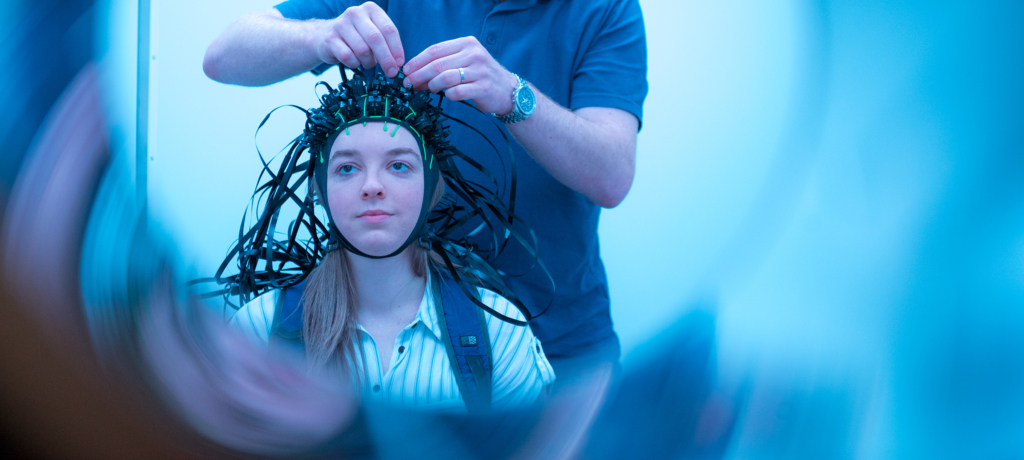
They monitored 63 adults, 32 with ADHD, 31 without, during sustained attention tasks with EEG tracking brain activity. People with ADHD showed dramatically higher density of slow waves (the kind produced during deep sleep) erupting across prefrontal and parietal cortices while fully awake.
“Everyone experiences brief moments of sleep-like activity,” Pinggal explained. “In people with ADHD, however, this occurs more frequently.”
Those slow waves shut down attention. When one ripples through your prefrontal cortex, you experience “mind blanking.” Thoughts stop. Tasks disappear from awareness. You’re momentarily offline.
Statistical modeling revealed that these slow waves are the mechanism explaining ADHD performance differences. Not dopamine deficiency. Not executive dysfunction. Actual micro-sleep events.
The Sleep Nobody’s Measuring
Multiple studies document that ADHD patients don’t sleep normally. Medication-free adolescents show reduced deep slow-wave sleep and more time in lighter stage 2 sleep.
A study in Translational Psychiatry found that ADHD patients showed 20.5% reduction in slow-wave activity across the whole brain during actual sleep. The delta-wave sleep that should consolidate memories, clear metabolic waste, and reset prefrontal circuits doesn’t happen.
This adds up to insufficient deep sleep at night. Then, during the day, the brain compensates by generating sleep-like slow waves while awake. The prefrontal cortex keeps trying to slip into the sleep it’s not getting in the AM hours.
ADHD symptoms: inattention, impulsivity, executive dysfunction, excessive daytime sleepiness, behavioral variability.
Chronic sleep deprivation symptoms: inattention, impulsivity, executive dysfunction, excessive sleepiness, and behavioral variability.
Same list.
The Chicken and the Egg
The DSM-5 classifies ADHD as neurodevelopmental. Treatment guidelines recommend stimulants as first-line. Millions take these daily. Global ADHD medication market: $25+ billion in 2024.
What if the DSM-5 got it backwards? What if ADHD isn’t primary, but secondary to chronic sleep deficit?
Monash study: ADHD participants showed mind-blanking episodes correlated with sleep-like slow waves. Neurotypical adults showed mind-wandering thoughts drifting while conscious. ADHD adults: mind-blanking—consciousness dropping out.
That’s not dopamine problems. That’s local sleep intrusion.
ADHD patients have reduced slow-wave activity during nighttime sleep. Brains aren’t getting adequate deep sleep. During wakefulness, the prefrontal cortex generates compensatory slow waves.
Stimulants work by increasing arousal. They force a sleep-deprived brain awake. They treat only the symptom (daytime sleepiness, as inattention), not the cause (insufficient restorative sleep).
The uncomfortable part: stimulants mask the sleep problem while making it worse. They degrade sleep quality. A person takes more medication. Sleep architecture deteriorates. Repeat.

The Hyperarousal Paradox
If ADHD is fundamentally a sleep deficit, why do some show hyperarousal on EEG?
Because it’s both.
ADHD EEG research identifies three subtypes: cortical hypoarousal (elevated theta), delayed maturation (increased slow-wave activity), and hyperarousal (excess beta).
Hyperarousal means the nervous system can’t downshift into sleep. Elevated beta in the prefrontal cortex represents the brain stuck in high alert. Can’t access slow waves needed for deep sleep.
During the day, the sleep-deprived, hyperaroused brain tries to generate slow waves to compensate, but erratically, creating attention problems. At night, it can’t sustain slow waves long enough for restorative sleep. Racing thoughts, light sleep, frequent waking.
Both subtypes—hypoarousal and hyperarousal—end in the same place: insufficient slow-wave sleep leading to compensatory slow waves intruding during wakefulness.
The Intergenerational Question
Where does sleep disruption originate?
Some ADHD cases run in families. Genetic factors contribute. But genetics doesn’t explain the explosion in diagnoses over 30 years.
What if we’re seeing intergenerational transmission of nervous system dysregulation? Trauma, chronic stress, and environmental disruption can, and do, alter EEG patterns. A hyperaroused parent passes on more than genes—nervous system patterns through developmental environment, stress hormones in utero, and learned regulatory patterns in early childhood.
A child with a hypervigilant nervous system never learns to sleep properly. The prefrontal cortex cannot develop in the absence of sufficient slow-wave activity. Circuits that should regulate attention form around compensatory patterns.
By school age, the symptoms are obvious. Professionals diagnose ADHD. They prescribe stimulants. But never address the fundamental sleep deficit or nervous system dysregulation.
That child, medicated but never taught to sleep properly, grows up and has children. The cycle continues.
Nobody’s measuring intergenerational EEG patterns or tracking whether addressing sleep and nervous system regulation in parents might prevent ADHD in children.
What Stimulants Actually Do (And Why That Matters)
Stimulant medications work. They reduce ADHD symptoms. People function better on them.
But “works” and “fixes the underlying problem” are different things.
Psycho-stimulants push dopamine and norepinephrine in the prefrontal cortex, enhancing arousal. A more aroused brain experiences fewer sleep-like slow-wave intrusions during waking hours. Attention improves. Impulsivity decreases.
But the sleep deficit remains. Stimulants often worsen sleep quality. The person needs medication to function precisely because their underlying sleep architecture never improves.
Here’s where pharmaceutical incentives become relevant. A medication that masks symptoms while allowing the condition to persist creates lifetime customers. A treatment that fixes the sleep problem might eliminate the need for ongoing medication.
ADHD medications generate $25+ billion annually. Sleep interventions such as cognitive-behavioral therapy for insomnia, sleep hygiene, and brainwave entrainment are not patentable. No recurring revenue.
Nobody’s saying there’s a conspiracy. Just aligned incentives, making it more profitable to medicate secondary-symptom ADHD indefinitely than to investigate whether fixing sleep might eliminate the diagnosis.
The Prefrontal Cortex Problem
In ADHD, the prefrontal cortex shows reduced activation during tasks requiring attention and executive function. Imaging studies demonstrate weaker prefrontal circuits, especially in the right hemisphere. Neurons are “out of tune”—unable to distinguish signal from noise.
Standard explanation: genetic factors affecting dopamine and norepinephrine signaling.
Sleep-deficit explanation: these neurons never get adequate slow-wave sleep to reset and maintain optimal function. They’re running on insufficient rest, generating compensatory slow waves during waking that interfere with attention.
Sleep-deprived neurotypical adults show similar patterns. After poor sleep, prefrontal cortex function degrades. Attention falters. Impulsivity increases. Executive function weakens. Give those adults weeks of poor sleep, and they start looking remarkably like people diagnosed with ADHD.
The difference? Neurotypical adults eventually catch up on sleep and return to baseline. People with ADHD never get that reset. Their baseline is chronic sleep deficit.
Brainwave Entrainment: The Inconvenient Truth
The pharmaceutical model really doesn’t want this discussed: Multiple studies show that non-pharmacological interventions targeting brain wave patterns can reduce ADHD symptoms.
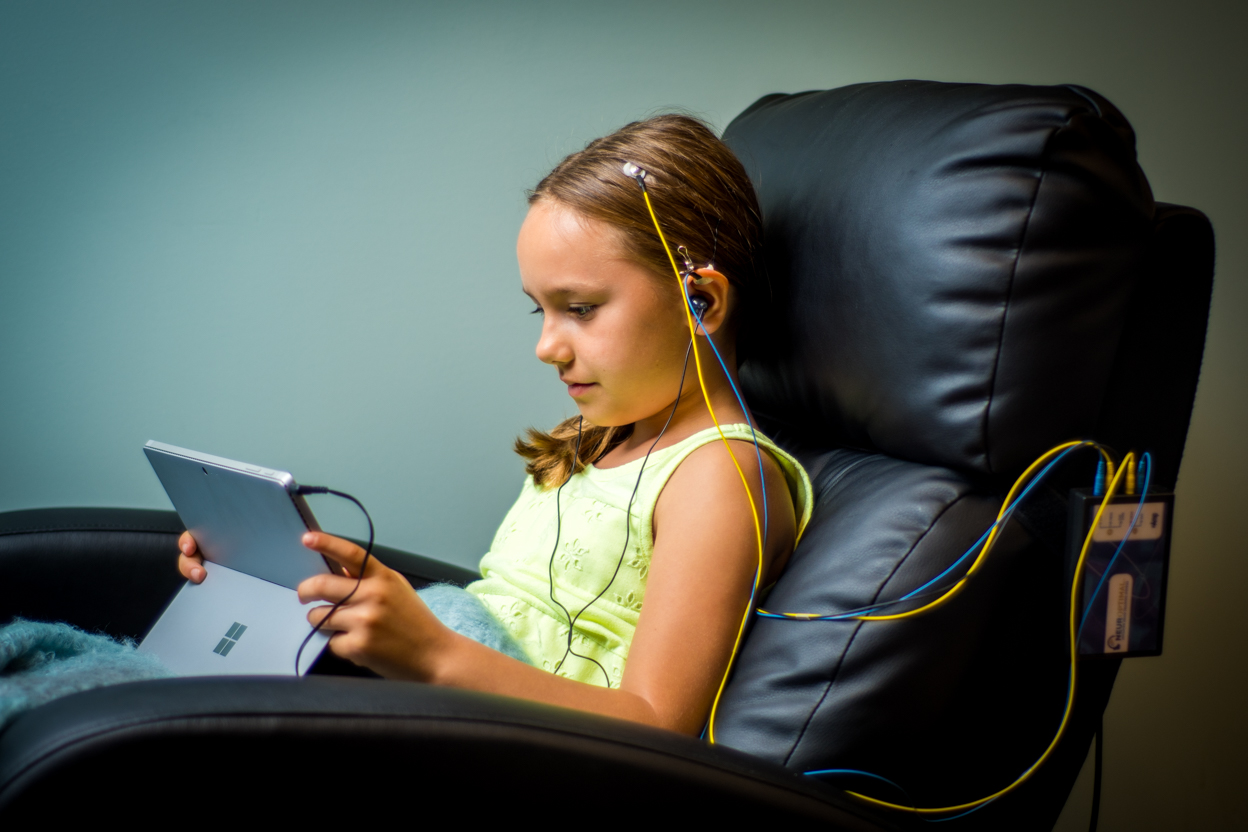
Neurofeedback training that increases slow-wave activity during sleep and reduces intrusive slow waves during waking shows measurable improvements in attention, executive function, and behavior. No side effects. No dependency. No ongoing costs.
A 2022 study demonstrated frequency-specific cognitive training increased 14-18 Hz EEG activity in prefrontal regions of children with ADHD. Performance improved. Scholastic performance improved.
Another study using repetitive transcranial magnetic stimulation directed at the right prefrontal cortex in adults with ADHD showed significant symptom improvement. An EEG biomarker is highly correlated with clinical outcomes.
These interventions target actual neurophysiological dysfunction, hyperarousal preventing adequate slow-wave sleep, or insufficient slow-wave generation, rather than masking symptoms with stimulants.
Sleep Recovery, Inc. has observed this across hundreds of clients. Address prefrontal cortex hyperarousal with brainwave entrainment. Help the brain relearn normal slow-wave patterns during sleep. ADHD symptoms often diminish dramatically without medication.
Not always. Not everyone. Some cases genuinely need pharmaceutical intervention. But far fewer than currently receive it.
The Diagnostic Question
Is ADHD a real disorder?
The symptoms are real. The suffering is real. The functional impairment is real.
But is the DSM-5 classification correct? Is ADHD truly a distinct neurodevelopmental disorder requiring lifetime medication? Or is it a symptom cluster arising from chronic sleep deficit caused by nervous system dysregulation that could be addressed through non-pharmacological interventions?
Evidence increasingly points toward the latter. Sleep-like slow waves intrude during wakefulness. Reduced slow-wave activity during actual sleep. Prefrontal cortex dysfunction is identical to that of sleep-deprived healthy adults. Symptom improvement with interventions that normalize sleep architecture without medication.
If mainstream psychiatry acknowledged this, the implications would be enormous. Billions in pharmaceutical revenue at risk. Diagnostic criteria would need revision. Treatment guidelines require an overhaul. Countless professionals need retraining.
So instead, we continue diagnosing ADHD as primary. Prescribing stimulants that mask symptoms while worsening sleep dysfunction. Creating generations dependent on medication, never addressing the root cause.
The science is there. The evidence is mounting. The question is whether anyone with institutional power dares to look honestly.
What You Can Do Right Now
If you or someone you care about carries an ADHD diagnosis, investigate sleep as a potential root cause before accepting lifetime medication as inevitable.
Track sleep carefully. Not just duration—architecture. How long to fall asleep? Night wakings? How do you feel waking? Daytime sleepiness levels?
Consider an at-home sleep study. Standard ADHD workups rarely include polysomnography. Find out what your actual sleep architecture looks like.
Explore an EEG brain scan. Quantitative EEG identifies whether your brain shows hypoarousal, hyperarousal, or delayed maturation patterns. Knowing your subtype guides targeted intervention.
Look into neurofeedback and brainwave entrainment before committing to stimulants. These approaches target underlying EEG dysregulation rather than forcing arousal. No side effects. No dependency.
Address stress and nervous system regulation. If the root cause is intergenerational trauma or chronic hypervigilance, treating symptoms with medication while ignoring the source ensures the pattern continues.
Question the diagnosis. Question whether medication is truly necessary or just convenient for a system profiting from your ongoing prescription. Question whether prescribers have considered sleep as the primary issue.
Sleep Recovery’s Perspective
We’ve worked with many clients carrying ADHD diagnoses who’d been on stimulants for years. When we address prefrontal cortex hyperarousal through alpha-theta neurofeedback and brainwave entrainment, a remarkable thing happens: the brain relearns normal sleep patterns. Slow-wave activity increases during actual sleep. Intrusive slow waves during wakefulness decrease. Symptoms classified as ADHD often resolve without medication.
Not everyone can eliminate medication entirely. Some need it. But far more than the current system acknowledges could address the root cause of the sleep deficit and function without ongoing pharmaceutical intervention.