Dissolving the Ego: Exploring a 2000 Year History of Brain Waves and the Self

The first time someone experiences what researchers now call ego death, the description sounds impossible. The boundaries of self dissolve. The familiar sense of being a separate person, watching the world through your eyes, stops. There’s awareness, but no one is aware of it. Experience continues, but the experiencer has vanished.
Modern neuroscience has recently discovered something remarkable about this state. When people take DMT and report ego dissolution, their alpha brain waves collapse. The regular rhythmic pattern that maintains our sense of continuous self over time breaks down. The brain shifts away from what researchers call criticality, that delicate balance between order and chaos that allows us to construct a stable identity moment to moment.
But long before scientists could measure brain waves with EEG machines, certain traditions knew how to induce this state deliberately. They understood it not as a malfunction of consciousness but as a doorway to transformation. What they were doing, without modern terminology, was training people to shift their brain patterns in precisely the ways current research is now documenting.
The Science of Self-Dissolving
The recent study by University College London and the University of Miami used DMT to understand the neural basis of self-awareness, and what they found challenges fundamental assumptions about how consciousness works.
Alpha waves are brain oscillations that occur at about 8 to 13 per second. They’re associated with what neuroscientists call self-referential processing. When you’re thinking about yourself, remembering your past, planning your future, and maintaining the narrative thread of who you are, alpha waves are active. They are part of the mechanism that creates continuity of self over time.
When DMT suppresses alpha activity, people report a dramatic shift. Time stops being a stream connecting past and future. Everything collapses into an eternal present. The sense of being a particular person with a specific history evaporates. What remains is awareness itself, but without anyone to claim it.
The researchers describe this as the brain moving away from a state of criticality. Typically, your brain operates at a sweet spot between complete chaos and rigid order. This critical state allows for flexibility, adaptation, prediction, and the maintenance of a coherent self-model over time. When those essential balance tips are missing, the self-model can’t sustain itself. The ego, as a constructed phenomenon, dissolves.
It isn’t damage or dysfunction. The brain is doing something different, operating under different rules. And when alpha waves return, so does the familiar sense of being a separate self. The self was never a permanent thing. It was an ongoing process that required specific brain patterns to maintain.
Shamans and the Journey to the Land of Death
The ancient Finnish epic Kalevala contains detailed descriptions of what we now call ego death, though the shamans who preserved these stories understood the experience through different frameworks.
One of the central figures in the Kalevala is Väinämöinen, the eternal singer and shaman. At several points in the epic, he makes journeys to Tuonela, the land of the dead. Tuonela isn’t precisely an afterlife in the Christian sense. It’s a realm that exists alongside ordinary reality, graspable to those who know how to shift their consciousness.
To reach Tuonela, Väinämöinen must cross a river. The ferryman doesn’t transport just anyone. The journey requires a particular state of consciousness, a willingness to let go of ordinary identity. Once across, Väinämöinen encounters beings who try to trap him there permanently. He escapes by transforming himself into different creatures, shifting his form, demonstrating that fixed identity has become fluid.
This theme of transformation through death appears even more dramatically in the story of Lemminkäinen, the hunter-shaman. When he attempts to hunt the swan of Tuonela, a herdsman kills him, and his body is torn to pieces and thrown into the river. His mother travels to Tuonela, gathers the scattered pieces, and through her knowledge of magical songs, reassembles and revives him.
The Finnish tradition understood what the modern DMT research is documenting. The coherent self we experience isn’t fundamental. It can be taken apart. And crucially, it can be reassembled in different ways. The shamanic journey to the death realm wasn’t about physical dying. It was about the temporary dissolution of ego structure, the experience of consciousness without the constraining narrative of personal identity.
These journeys required training. Finnish shamans used rhythmic singing, the sacred drum, and specific breathing techniques. They were working directly with altered states of consciousness. What we now know is that rhythmic auditory stimulation entrains brain waves. The techniques Finnish shamans developed thousands of years ago were methods for shifting away from beta and alpha dominance into theta frequencies, where the boundaries of self become negotiable.
The tietäjä, the Finnish wise one or knower, was someone who could deliberately navigate these states. They hadn’t lost their mind. They had learned to operate consciousness in multiple modes, including ones in which the ordinary self temporarily dissolved.
The Gnostic Secret: You Are Not Who You Think You Are
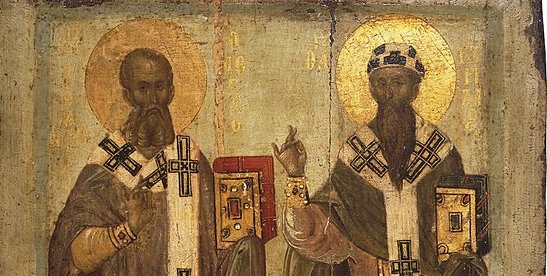
When scholars translated the Nag Hammadi texts in the decades after their discovery in 1945, they found teachings that paralleled the shamanic understanding of ego death, though expressed through different symbols and concepts.
The Gnostic Christians who hid these texts in clay jars believed salvation came through gnosis, a Greek word meaning knowledge. But this wasn’t intellectual knowledge. It was direct experiential recognition of your true nature. And central to that recognition was understanding that the self you think you are is false.
The Gospel of Thomas, one of the most essential texts from Nag Hammadi, puts it bluntly. Jesus speaks in brief, cryptic sayings designed to shatter conventional understanding. When his disciples ask when the kingdom will come, he tells them it’s already here, both inside and outside them. When they learn to know themselves, they’ll realize they’re children of the living father.
The Gnostic framework held that human beings have two levels of identity. There’s the constructed self, built from social conditioning, memories, desires, fears, the story you tell about who you are. This awareness is what Gnostics called the psychic or soulish nature. Below that, hidden and forgotten, is something they called the pneumatic or spiritual nature. This deeper level isn’t personal in the way the ego is personal. It’s a spark of divine consciousness that got trapped in matter.
Gnosis meant waking up to this deeper nature. But you couldn’t do that while completely identified with the constructed self. The ego had to die, temporarily or permanently, for the more profound truth to be recognized.
In the Gospel of Thomas, Jesus describes this transformation in terms that sound paradoxical. You have to become like an infant, innocent and unconditioned. You have to make the two into one, dissolving the split between inner and outer, male and female, the dualities that structure ordinary consciousness. When you’re naked and unashamed, you’ve returned to the primordial state before the fall into separation.
What Gnostics understood is what modern neuroscience research demonstrates. The self you experience as continuous over time is constructed through specific brain processes. It’s a story consciousness tells itself. When those processes shift, when alpha wave patterns break down, the story stops being believable. What remains is direct awareness, free of the filter of constructed identity.
The Gnostic practices for inducing this state varied. Some groups used prolonged meditation. Others used specific body postures, breathing techniques, or contemplation of paradoxical teachings designed to short-circuit standard mental patterns. They worked with the same principles as Finnish shamans, though their cultural frameworks differed.
Both traditions understood something crucial. The death of the ego isn’t destruction. It’s a revelation. When the constructed self dissolves, what emerges is something that has always been there underneath, something more fundamental than your personal story.
Here’s where ancient wisdom and modern sleep science meet in unexpected ways. The brain states that these traditions deliberately cultivated are the opposite of what happens in chronic anxiety and insomnia.
When your nervous system is stuck in hyperarousal, your brain produces excessive beta waves, the fast frequencies associated with alert problem-solving and threat detection. This beta dominance prevents the natural transition to alpha, the bridge state between waking and more profound relaxation.
But even when anxious brains do produce alpha waves, they often do so in a rigid, inflexible pattern. The alpha doesn’t flow naturally. It’s locked in a specific frequency, maintaining tight control. It’s the opposite of what happens in ego-death experiences, where alpha waves don’t just reduce; they lose their standard structure entirely.
Think about what this means. The DMT research shows that ego dissolution correlates with alpha wave collapse. But people with chronic anxiety have alpha patterns that are too rigid, too controlling. Their brain is desperately maintaining the coherence of self-identity because letting go feels dangerous. The nervous system won’t permit the kind of wave pattern flexibility that would allow consciousness to shift into other modes.
This truth is why people with deep brain anxiety often report that meditation practices described in spiritual traditions don’t work for them. When texts talk about dissolving the ego or experiencing no-self, it sounds abstract or impossible. Their nervous system won’t let go enough even to glimpse these states. The brain patterns that would allow ego boundaries to become fluid are exactly the patterns their anxious system won’t permit.
Finnish shamans spent years training. Gnostic practitioners underwent systematic preparation. These weren’t weekend workshops. The capacity to shift consciousness in these ways required the nervous system first to learn that it’s safe to reduce its vigilant grip on identity. You can’t dissolve ego boundaries when your brain is in constant high alert, maintaining rigid self-other distinctions as a survival strategy.
Training the Brain to Let Go
This process is where Sleep Recovery’s approach becomes relevant to these ancient traditions, even though it doesn’t frame itself in spiritual terms. The deep brain anxiety protocol works directly with brain wave patterns, using entrainment to help the nervous system access states it typically resists.
Brainwave entrainment exposes the brain to specific frequencies. Over time, and through repeated exposure, the brain learns to produce those frequencies more easily. It’s training, similar to how shamans trained with drumming or Gnostics trained with breathing patterns. The difference is precision. Modern technology can target exact frequencies in ways ancient practitioners couldn’t.
The protocol targets alpha and theta frequencies explicitly. It’s training the brain to move through alpha smoothly rather than getting stuck there rigidly. It’s teaching the nervous system that shifting out of beta hyperalertness into slower wave patterns isn’t dangerous. The protocol doesn’t directly induce ego death experiences. What it does is remove the neurological block that prevents these states from occurring naturally.
When the research describes DMT pushing the brain away from criticality, that’s an acute, dramatic shift. But even moving toward that territory requires a nervous system capable of flexibility. You have to be able to tolerate alpha wave patterns becoming less rigid. You have to be able to let consciousness drift out of its normal self-maintaining operations without the system snapping back into high alert.
The protocol doesn’t teach spiritual practices. It doesn’t guide people through shamanic journeys or Gnostic contemplation. What it does is restore the neurological flexibility that makes those practices possible. It’s addressing the root physiological barrier that keeps people locked into rigid ego boundaries.
As the nervous system learns to reliably access alpha and theta states, something interesting happens. The boundaries that seemed so fixed are starting to feel more negotiable. The sense of self that felt absolutely solid begins to reveal itself as a construct. It doesn’t happen through belief or imagination. It occurs because the brain patterns that maintain rigid self-boundaries are literally changing.
What Opens When Control Loosens
People who successfully resolve chronic hyperarousal through brain training often report unexpected experiences. They describe moments where their sense of self feels different, less fixed, more spacious. Time changes quality, becoming less linear. The sharp distinction between self and world softens.
These aren’t hallucinations. They’re glimpses of what consciousness is like when it operates under different wave patterns. The shamanic journeys Finnish practitioners described, the gnosis Nag Hammadi texts pointed toward, these weren’t supernatural events. They were natural capacities of consciousness that become accessible when the brain’s standard self-maintaining patterns relax their grip.
Modern culture has forgotten mainly that these states exist. We’ve built entire worldviews around the assumption that the ego you experience is all there is, that the boundaries of personal identity are absolute. The DMT research is crucial because it demonstrates scientifically what mystics have always known. The self is a process, not a thing. When the process changes, the experience of being a self transforms.
Finnish shamans knew this. They developed precise methods for shifting consciousness into death-realm states and returning intact. Gnostics knew this. They taught that the constructed personality must die for proper awareness to be born. The language differs, but the core insight remains constant across traditions. What you are is not limited to what you think you are.
The barrier isn’t conceptual. It’s neurological. A nervous system locked in defensive hyperarousal can’t access the flexibility required for ego boundaries to dissolve, even temporarily. The brain patterns that maintain rigid self-identity are the same patterns that keep you locked in anxiety and insomnia.
When those patterns shift, when alpha waves learn to flow rather than lock, when the nervous system discovers it’s safe to let go of constant vigilance, something opens. Not immediately. Not dramatically. But gradually, the rigid boundaries soften. The absolute sense of separation becomes less absolute.
Modern research on DMT and alpha waves is confirming what they already knew experientially. The self you carry around as if it’s solid and permanent is actually a pattern of brain activity. When that pattern shifts, reality shifts with it. The death of the ego isn’t the end of consciousness. It’s the beginning of discovering what consciousness is beyond the narrow identity you’ve been maintaining.
For more information on Sleep Recovery’s programs, please visit https://sleeprecovery.net. Please call 1-800-927-2339 to schedule a no-cost phone consultation.