Is Addiction a Lack of Willpower? Scientists Find the Brain Switch That Triggers Relapse

When addicts walk into their first meeting of recovery, there’s a subtle, sometimes profound shift in state. Self-will loosens its grip, and that one millimeter of open-mindedness lets in a tsunami of fresh hope.
This euphoria can last days, weeks, or even months. Then comfort sets in. The safe space of meetings creates a false sense of indestructibility. “I’ll NEVER use again!
Famous last words for 90%+ of people who relapse within their first 18 months of sobriety.
But here’s what you need to know: relapse isn’t a character flaw. It’s a specific neural circuit misfiring in your brain.
New research from KAIST and the University of California, San Diego has just identified the exact brain mechanism that makes people relapse after quitting cocaine. And the findings flip everything we thought we knew about addiction on its head.
The Old Story Was Wrong
For years, scientists blamed addiction relapse on general brain weakness. The prefrontal cortex—your brain’s impulse control center—gets worn down by drug use, so you can’t resist cravings anymore. Simple story. Makes sense. Completely wrong.
Se-Bum Paik at KAIST and Byung Kook Lim at UC San Diego found something much more specific. Relapse doesn’t come from your whole brain getting weaker. It results from one type of cell losing control of a specific pathway.
The cells are called parvalbumin-positive neurons. PV cells for short. They make up 60-70% of the inhibitory neurons in your prefrontal cortex, and they work like brake pads on a car. When they’re functioning right, they regulate the signals flowing from your decision-making brain to your reward circuit. When they fail, the brakes give out.
And when the brakes fail, even tiny triggers can send you straight back to drug-seeking behavior.

The Gate That Controls Everything
Think of PV neurons as a gate between two parts of your brain. On one side: your prefrontal cortex, trying to make rational decisions. On the other hand, your ventral tegmental area (VTA), your brain’s reward center, floods you with dopamine when you get what you want.
When you use cocaine, that gate gets stuck. Signals flow unchecked from the prefrontal cortex to the VTA. Your brain learns that cocaine equals reward at a circuit level, carving a deep neural pathway that doesn’t go away just because you stop using.
The research team tested this in mice. When they artificially suppressed PV cell activity, cocaine-seeking behavior dropped dramatically. When they activated the cells, drug-seeking persisted even after the mice had undergone standard extinction training.
Here’s the crucial part: the effect was specific to drugs. When researchers tried the same manipulation with sugar water—a natural reward—nothing happened. PV cells don’t regulate all rewards. They selectively gate addictive substances.
Why Cravings Come Back After Months
Minju Jeong, the study’s first author, tracked what happens in these neurons over time. The problem isn’t just during active use. The real danger shows up during withdrawal and long after.
PV neurons are supposed to suppress the pathway between your prefrontal cortex and reward circuit. In healthy brains, they keep the gate mostly closed, letting through only appropriate signals. In addition, they lose that regulatory power.
Two weeks after mice stopped using cocaine, PV cell function remained disrupted. A month later? Still disrupted. The circuit stays broken long after the drug leaves your system.
So you’re three months clean, feeling good, thinking you’ve got this under control. Then you see something that reminds you of using—maybe just a commercial on TV or walking past the bar where you used to score—and that damaged circuit lights up like it did when you were actively using. The gate flies open. Dopamine floods in. Craving crashes over you like a physical wave.
And you genuinely believe you’re failing at willpower when actually your PV cells just lost their grip on the brake.
Not Just Cocaine
The KAIST research focused on cocaine, but parallel studies on opioids found similar circuit-level mechanisms. Washington State University researchers discovered that a different pathway—from the prelimbic cortex to the paraventricular thalamus—drives heroin-seeking behavior after withdrawal.
Giuseppe Giannotti at WSU found that reducing activity in that specific circuit dropped heroin-seeking behavior significantly. Environmental cues that typically triggered relapse stopped working when the circuit got dampened.
Different drugs hijack different pathways. But the principle stays the same: addiction isn’t general brain damage. It’s precise neural circuits getting locked into dysfunctional patterns that persist long after you quit using.
The Relapse Statistics Nobody Talks About
Nearly 60% of people relapse within one week of completing inpatient detox. Seventy-seven percent relapse within six months after short-term care without medication assistance.
About 24% of people who quit cocaine relapse to weekly use within a year. Another 18% return to treatment. And right now? There’s no FDA-approved medication for cocaine addiction.
We tell people to “just say no” while their prefrontal cortex literally cannot regulate the signals flooding their reward circuit.
What Precision Treatment Could Look Like
Here’s where the research gets hopeful. Because PV neurons are a specific target, they open the door to precision interventions.
Paik emphasized that this discovery reveals addiction as a circuit-level problem. “The discovery that parvalbumin cells act as a ‘gate’ for addictive behavior will provide a crucial lead for developing precision-targeted treatment strategies,” he said.
What might that look like?
Medications that specifically enhance PV neuron function. Not general mood stabilizers. Targeted compounds that help those cells regain control over the prefrontal-to-VTA pathway.
Deep brain stimulation targeting the exact circuit. Electrodes delivering controlled impulses to strengthen gate function. Already works for severe depression and Parkinson’s. Addiction could be next.
Transcranial magnetic stimulation calibrated to boost PV cell activity. Non-invasive, targeted, potentially effective for preventing relapse during high-risk periods.
Sleep’s Role in the Circuit
Here’s something most addiction research misses: sleep disruption wrecks PV neuron function.
Sleep deprivation impairs inhibitory neurons throughout the prefrontal cortex. The very cells you need working overtime to prevent relapse? They depend on adequate sleep to maintain regulatory control. When you’re in early recovery and can’t sleep—which is extremely common during withdrawal—you’re weakening the exact circuit that needs strengthening.
Chronic insomnia creates a vicious cycle. Poor sleep impairs PV neurons. Impaired PV neurons can’t regulate the addiction pathway. The dysfunctional pathway triggers cravings. Cravings create stress and anxiety. Stress and anxiety prevent sleep.
Breaking that cycle requires addressing sleep as part of recovery, not as a side issue.
What You Can Do Right Now
If you’re in recovery or supporting someone who is, understanding the circuit-level nature of relapse changes everything.
Stop blaming yourself for cravings. They’re not moral failures. There are specific neurons losing control over a specific pathway that was carved by repeated drug use.
Take sleep seriously. Protect your sleep like it’s a life raft, because for your PV neurons, it basically is. Aim for 7-8 hours consistently. Create a dark, quiet environment. Avoid screens before bed. If insomnia persists, get professional help.
Recognize that high-risk periods aren’t random. The first weeks and months after quitting are when PV neuron dysfunction is most pronounced. Environmental cues will hit harder during this window. Plan for it.
Ask your treatment team about emerging options. Deep brain stimulation and targeted magnetic stimulation for addiction are moving from research to clinical trials. You might not have access yet, but asking administratively triggers future demand for these approaches.
And know that research is accelerating. What looked like permanent brain damage ten years ago now appears to be specific circuits we could reset. The gate that controls relapse can be fixed.
That’s not false hope. That’s neuroscience.
Sleep Recovery’s Perspective
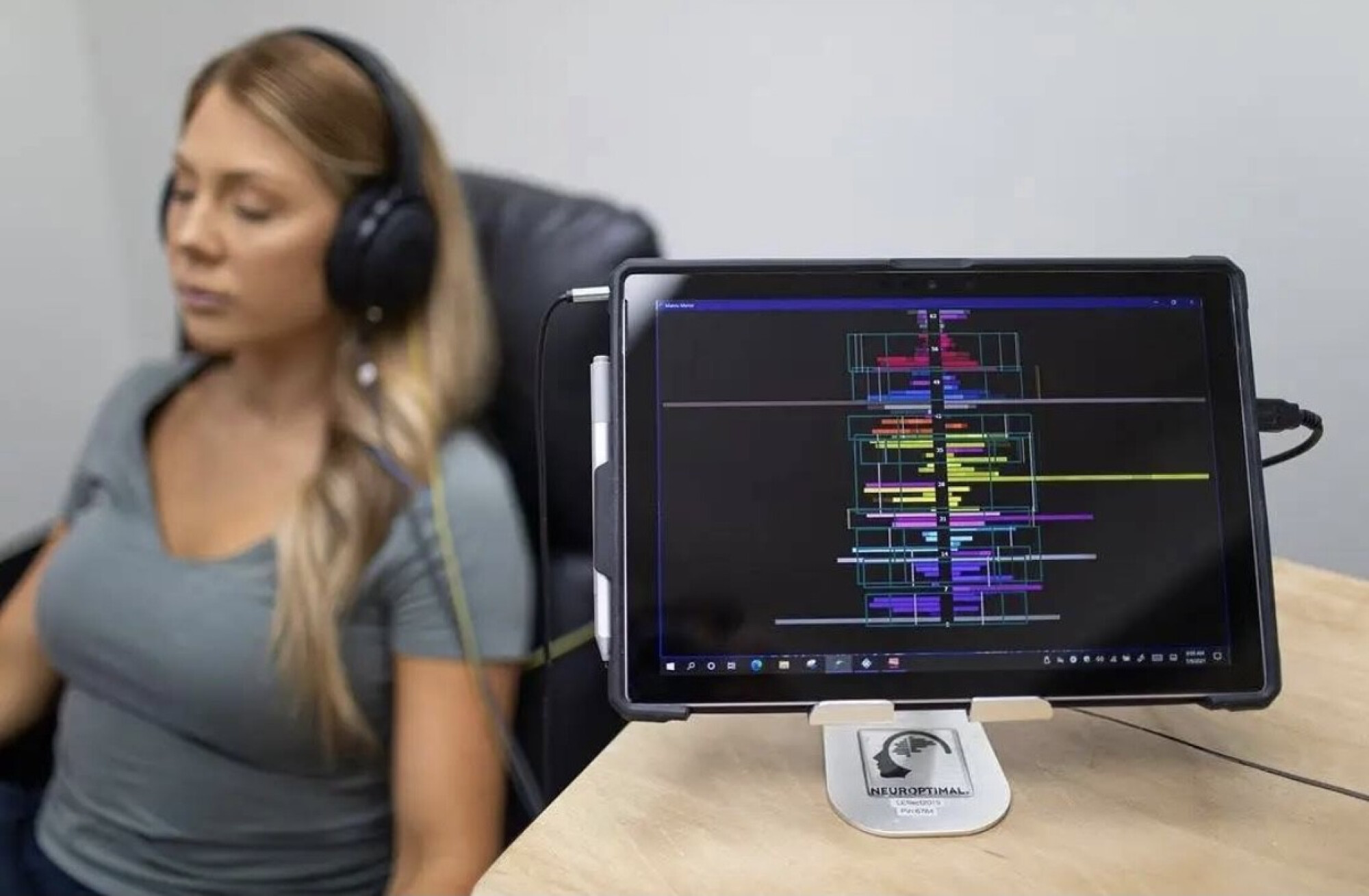
At Sleep Recovery, we’ve worked with many clients in addiction recovery who struggle with persistent insomnia and relapse-related anxiety. We’ve seen firsthand how sleep disruption undermines recovery efforts. Our neurofeedback approach helps retrain the brain’s regulatory systems, including the prefrontal cortex circuits destabilized by addiction.
While we don’t treat addiction directly, we do address the sleep and anxiety patterns that make relapse more likely. Strengthening prefrontal cortex function through neurofeedback, combined with sleep optimization, gives your brain a better foundation for maintaining recovery.
For more info on Sleep Recovery’s programs, please visit: https://sleeprecovery.net or call 800 927 2339